
Nonprofit Inventory Management: Donation Intake to Distribution
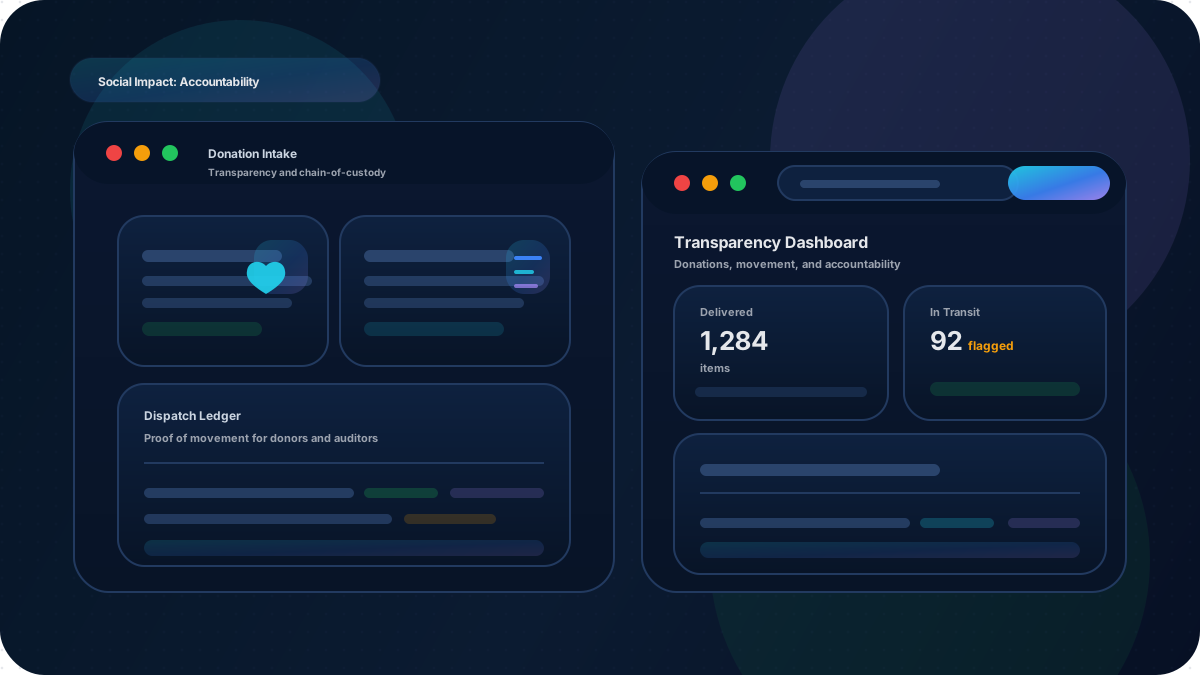
Nonprofit inventory management means keeping a usable record of physical goods received, held and distributed. Food pantries, community supply closets and school-supply programs need to answer the same questions: what is available, where is it, and which movements explain the balance?
Start with one location and a small set of frequently distributed items. A shared spreadsheet can be enough when one person maintains it; multiple locations or overlapping volunteer shifts make consistent item names, access permissions and a movement history more important. The workflow below works before you choose software.
1. Record donation intake in a consistent unit
Give each item a stable name and unit, such as one hygiene kit or one sealed case. Record the received quantity, date, condition, receiving location and a donation reference. Keep donor contact details in an appropriate separate record instead of placing them on a stockroom sheet shared with every volunteer.
If a case contains 12 units, record that conversion explicitly. Do not add cases and individual units together. Record program restrictions, lot references and relevant dates when your operation needs them. A stock record is not a donor valuation or a tax receipt.
2. Separate available stock from holds and transfers
Use clear locations for storage, picking and held items. Record each movement with an item, quantity, source, destination, date and responsible person. A transfer between two sites changes their balances but does not count as distribution to a beneficiary.
For food donations, follow your receiving organization’s acceptance and storage procedures. Feeding America advises checking with the local food bank and retaining original labels and sound packaging. Do not treat a software note as a food-safety decision.
3. Reconcile a distribution with a worked example
Example, not customer results: a supply closet starts with 40 hygiene kits, receives 60, distributes 55 and removes 3 damaged kits. Expected closing stock is 40 + 60 − 55 − 3 = 42 kits. A physical count of 41 creates a variance of −1 kit.
Check the intake record, distribution sheet, transfers and damage log before adjusting the balance. Record the explanation and reviewer so a later volunteer can follow the decision. Count frequently moved items on a regular schedule rather than waiting for a year-end surprise.
4. Report movements without overstating impact
A useful period summary includes opening stock, receipts, distributions, losses, closing stock and unresolved variances by program and location. Keep the underlying references available for review. Counts of goods distributed are operational measures; they do not by themselves prove beneficiary outcomes or grant compliance.
Use the printable donation checklist for a shift handover. If you need shared locations and transfers, compare the nonprofit solution workflow with your current process and confirm the required fields and reporting needs in a demonstration.